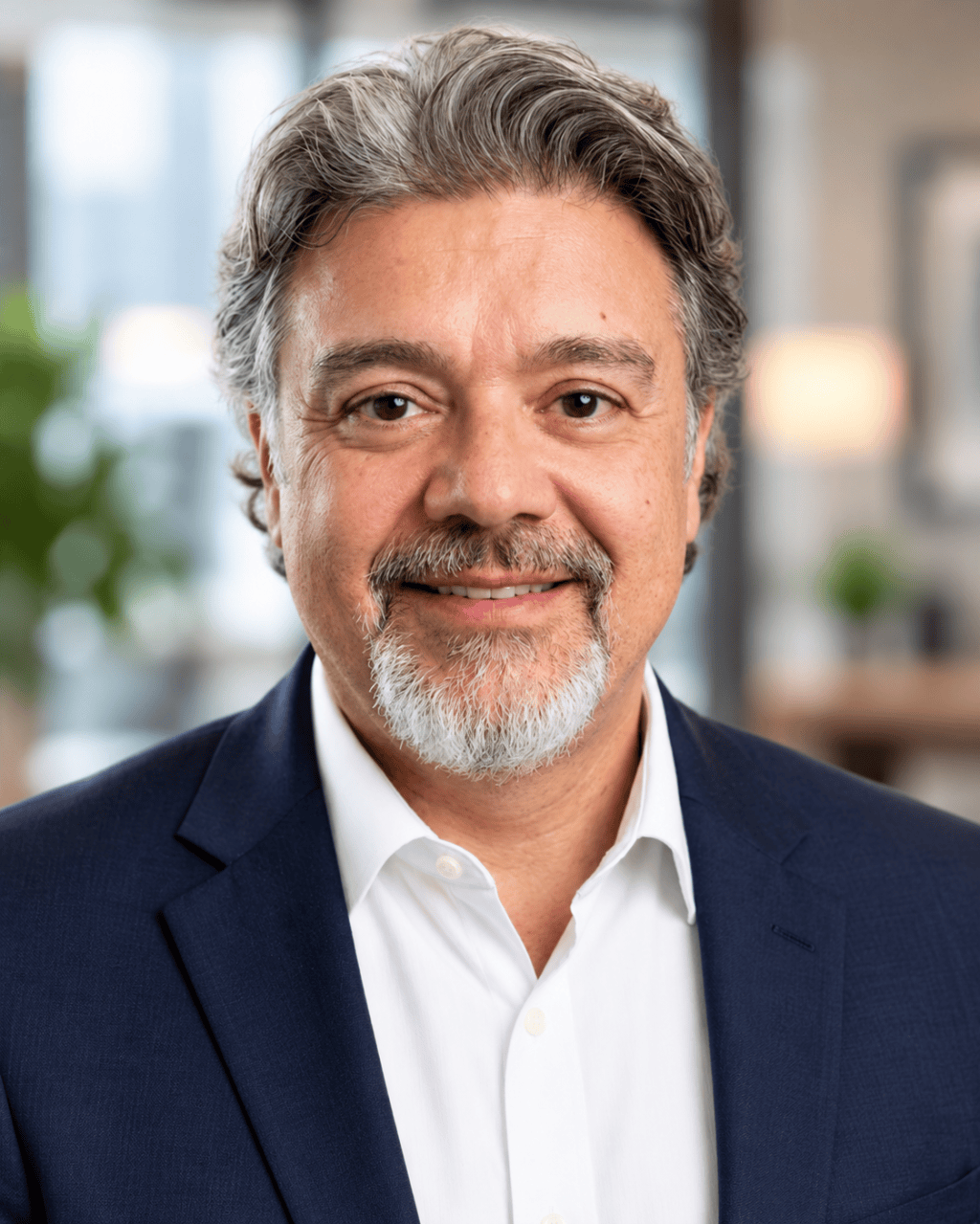
For Rubén Rodríguez, the new director of college completion at Wayside and STHS, success is not a diploma. It is what comes after.
“Success is that a student finishes high school and doesn’t see it, think of it, or feel it as the end of their academic career,” he said. “They have to keep moving forward after they graduate.”
Three weeks into the role, Rodríguez is already laying out a vision for the school that pushes students, especially first-generation college students, to think past graduation. That vision is shaped by his own path, one that started in Monterrey, Mexico, and shifted because of a single moment in his high school senior year.
As a senior in a Houston suburb, Rodríguez took the SAT only because a friend told him the deadline was the next day. He asked his father for the registration money and sat for an exam he knew nothing about. The scores came back nearly perfect in math. A university in New York reached out. A Navy recruiter told him those results could put him on track to become an astronaut. Then he reached the line on the application asking for a Social Security number.
That was when his father told him he didn’t have one.
“It changed my whole world,” he said.
After amnesty legislation allowed him to become a permanent resident, Rodríguez worked his way through college, sometimes pulling 16 to 18 hour weekend shifts in an emergency room while attending Stephen F. Austin University in Nacogdoches during the week. He started out wanting to be a doctor. A social worker he met in the ER, helping families through some of the worst moments of their lives, changed his mind. He earned a bachelor’s in social work and later a master’s in Social Work.
That history is part of why Rodríguez talks about high school the way he does. He wants students leaving STHS already used to college-level work, not surprised by it.
“It all starts in middle school,” he said. “Sixth, seventh, and eighth grade define the culture for the four years of high school. Optimally, those courses come with rigor. Yes, they’re harder, but that’s what makes high school easier.”
He thinks schools need more reading, more discussion, and more of what he called a college culture inside schools. He pointed to the kind of workload students can expect at the next level, where a single chemistry assignment might run 100 pages before the next class. “If we don’t make them read more, we’re not preparing them for what’s coming,” he said.
To support that push, Rodríguez plans to bring in outside organizations that work specifically with first-generation college students, programs that can pair a student interested in architecture, for example, with a working architect who can walk them through their own path from high school into the career.
“My mom went to college in Nicaragua, but she didn’t know or understand the system here,” he said. He wants students to have the guidance he didn’t.
One of the harder conversations he is trying to have, he said, is with parents about money.
“It has been difficult to leave Latino families with the idea that, for the first time, they may have to talk about finances with their children,” he said. Many families, he explained, do not openly discuss salaries at home. But the FAFSA, the federal financial aid form, requires exactly that. “There’s a very solid line where there isn’t much communication between parents and children about how much someone makes.”
The other obstacle, he said, is trust. Some parents are reluctant to bring their tax forms to a counselor, even when that is the fastest way to access aid. “But the other option is they do it themselves without help, and it isn’t an easy system.”
As a leader, Rodríguez says he doesn’t try to make the people working with him copy his methods. He wants them to be comfortable doing the job their own way, not his.
“I don’t want them to do it the way I do it, because that works for me, but maybe it’s not going to work for them,” he said. “I don’t want to have people who are robots.”
So far, the welcome at Wayside has gone well. Mr. Sosa has been a key partner, and the two are already working through a pair of leadership books together.
“That means he is investing in my development here,” Rodríguez said. “And that is very good too.”
Asked about a favorite passage, Rodríguez quoted the poet Alfred Tennyson: “Live pure, speak truth, right wrong, and follow the King.”
“Nobody is perfect, nobody is completely pure,” he said. “But having that as a goal is what I like about that passage.”
This story was written by STHS alumnus Joscan Flores.
 The Raven Report
Leave a comment